
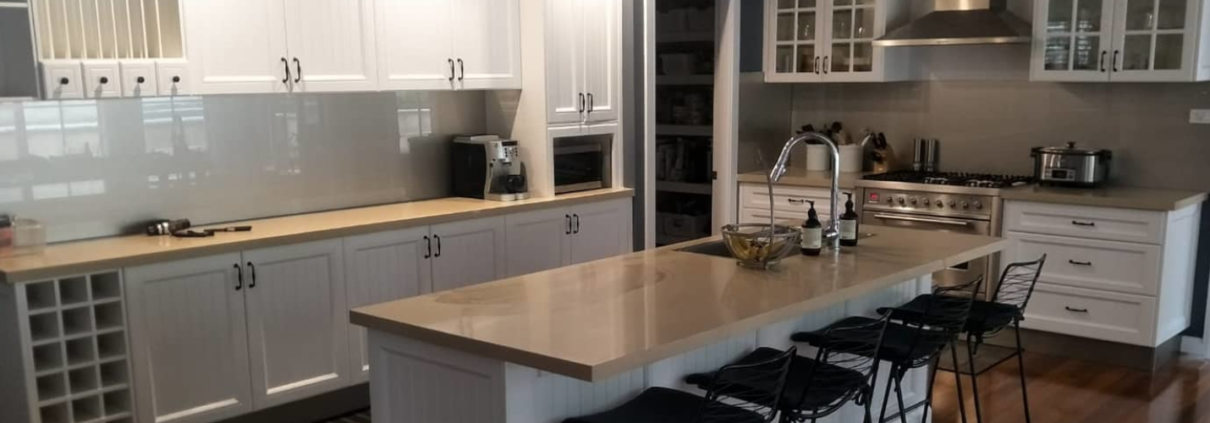
Staring at a peeling, dated or dull kitchen every morning is frustrating. Ripping out perfectly good cabinets just to change the colour wastes significant time and money. For a modern update without the demolition dust and hefty price tag of a full rebuild, resurfacing is the smartest alternative.
When looking for reliable cabinet resurfacing services in Sydney, homeowners often have questions about what paint can actually achieve. Success requires selecting the right coating for your specific household needs. This guide breaks down exactly how to choose the best finish based on your existing cabinet material, desired aesthetic, durability requirements and budget.
Why your existing cabinet material matters
Before looking at topcoats for your kitchen painting project, you must understand your current cabinetry. The material dictates the preparation process, which is the absolute foundation of any lasting finish. Different substrates require completely different prep methods to ensure the paint bonds properly:
- Laminate and melamine: These non-porous surfaces are designed to repel moisture. To ensure paint adheres securely, they require intensive industrial degreasing followed by thorough mechanical scuffing. Technicians then apply specialised adhesion primers. Without this chemical-and-mechanical bond, the final coat will easily chip.
- Solid timber: This material is highly porous and contains natural oils. Preparing solid timber cabinets involves stripping back the existing clear coat. If you want a flat finish, the natural wood grain must be filled and sanded smooth. Timber also requires stain-blocking primers so tannins do not bleed through and discolour the fresh paint.
- Raw MDF: This engineered wood presents another unique challenge. Its cut edges act like a sponge. If not sealed correctly with high-build primers before painting, the MDF will absorb moisture and swell irreparably.
Whether your kitchen is built from solid timber or melamine, tailored preparation is what separates a DIY disaster from professional kitchen cabinet resurfacing.
Comparing your finish options
When evaluating finishes for your doors and panels, you need to balance durability, aesthetics and budget.
2PAC spray painting
2PAC (two-pack) is an advanced acrylic enamel paint system that mixes a coloured base with a hardener resin. This chemical reaction creates a hardened outer shell incredibly resistant to heat, moisture, food stains and impacts. It uses proven automotive industry technology.
- Best for: Busy family kitchens with high daily traffic and frequent cooking.
- Look: Available in matte, satin and high gloss to suit any design.
- Budget Tier: Premium.
If you are considering this option, understanding the technical benefits and budgeting requirements is straightforward when you look into the specifics of a 2PAC spray painting finish.
Polyurethane spray painting
Polyurethane provides a tough, seamless and highly flexible protective coating. It is widely used in residential cabinetry because it offers exceptional resistance to scratches and cleaning chemicals. Its flexibility allows it to move with the substrate, making it highly effective for solid timber doors that naturally expand and contract without cracking. This versatility makes it ideal for kitchens as well as wardrobe door painting projects across your home.
- Best for: Standard to heavy household use requiring a robust surface.
- Look: Can be tailored to exact gloss levels from matte to full gloss.
- Budget Tier: Mid-range to Premium.
Understanding how this precise application process protects your cabinetry helps clarify why professional polyurethane spray painting is a popular choice for lasting residential upgrades.
Laminate
Laminate is a synthetic material glued over an MDF core. While a common choice for budget-conscious builds, it is highly prone to peeling, bubbling and chipping over time. Instead of replacing peeling doors with more laminate, homeowners often opt for resurfacing existing cabinetry to achieve a superior painted finish. This upgrades the space structurally by sealing vulnerable edges and aesthetically by providing a modern colour.
Quick decision guide
To simplify your decision-making, we have created a straightforward comparison table that matches your existing materials to the recommended finish.
|
Existing Material |
Recommended Finish |
Why It Works |
|
Laminate or Melamine |
Polyurethane or 2PAC |
Respraying existing laminate seals vulnerable peeling edges and upgrades the kitchen from a basic look to a premium finish. |
|
Solid Timber |
Polyurethane |
Provides a thick, flexible coating to create a modern aesthetic that will not crack during temperature changes. |
|
MDF |
2PAC |
Completely seals the highly porous edges of raw MDF to actively prevent moisture ingress and permanent swelling. |
|
Previously Painted Cabinets |
Polyurethane |
A cost-effective way to refresh a scuffed surface while delivering excellent durability and crisp colour. |
Get expert advice on your kitchen finish
Choosing the right finish depends on your routine, cabinets and budget. Resurfacing delivers a factory-new appearance for significantly less than a full replacement, without the demolition mess.
For the best kitchen resurfacing services in Sydney, our team provides expert recommendations tailored to your cabinetry.
Contact DK Spray Painting today to book a design consultation and find the perfect finish for your home.
FAQs
Can I switch from flat laminate to a painted timber-look finish?
A common misconception is that paint can replicate a natural timber grain. If you currently have flat laminate doors, spraying them produces a flawless, solid-colour finish. Paint cannot create a realistic wood grain texture where none exists. If you are happy to transition to a modern solid colour, respraying is the ideal solution.
Does polyurethane yellow over time?
Older oil-based paints were notorious for yellowing as they aged. However, modern professional spray painting uses advanced UV-stable formulations. A white polyurethane finish will retain its crisp, clean appearance for years without discolouring. Professionals also use low-VOC coatings in line with strict guidelines from the NSW Environment Protection Authority, ensuring a safer environment for your home and better indoor air quality.
